
Empowering Entrepreneurial Journeys: The Vital Role of Personal Goals
April 21, 2024
Eswatini Entrepreneurs Explore the World of IP Protection
June 7, 2024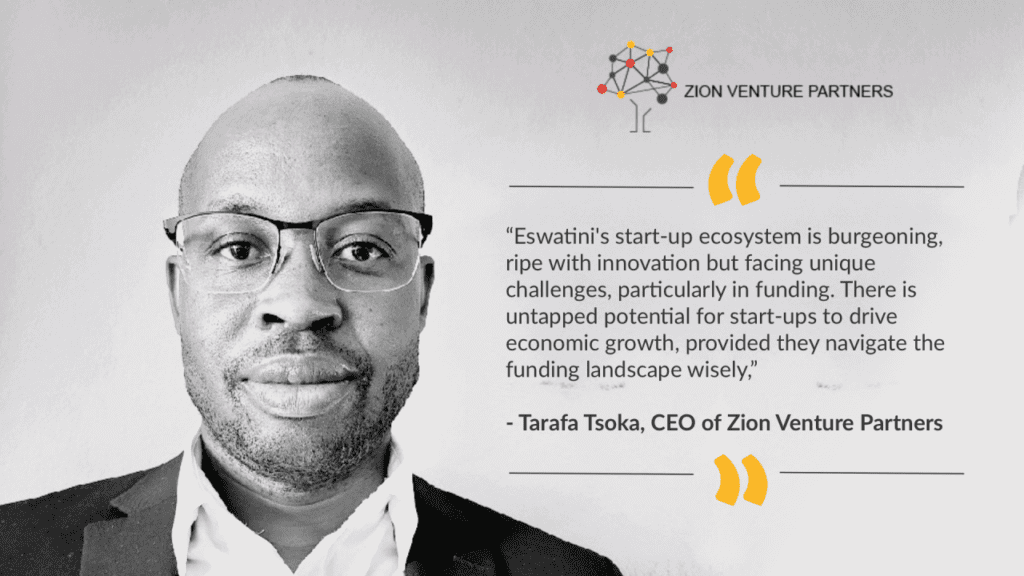
Last Thursday, Pinaco & Co in collaboration with Zion Venture Partners (Pty) Ltd hosted an empowerment Webinar for Eswatini entreprenuers which unpacked critical aspects of fundraising for growth-stage start-ups with focus on the strategic decision between equity and debt funding.
“Eswatini’s start-up ecosystem is burgeoning, ripe with innovation but facing unique challenges, particularly in funding. There is untapped potential for start-ups to drive economic growth, provided they navigate the funding landscape wisely,” CEO of Zion Venture Partners, Tarafa Tsoka said in his opening remarks.
The Webinar was attended by 15 entrepreneurs from Eswatini and some guests in the South African venture capital industry who were keen to learn about the Eswatini’s “untapped potential.” In his introductory remarks, Pinaco & Co Senior Partner, Lwazi Ian Dlamini, said, “We are on a mission to discover and present to the world Eswatini’s first unicorn.”
Understanding the Difference between Equity and Debt Funding
“Equity funding,”Tafara Tsoka explained, “involves exchanging ownership stake for capital, aligning investors directly with your business success. Debt funding on the other hand, entails borrowing money to be repaid over time with interest, without giving away any ownership.”
Highlighting the benefits of equity funding, he said investors often provide more than capital – they bring invaluable networks and mentorship. Moreover, the risk is shared, reducing the financial pressure on your start-up during tough times. On the flip side, entrepreneurs need to understand the terms, potential dilution of ownership and the consequences of failure. “Choosing investors whose vision aligns with yours is crucial,” he advised.
Benefits of debt funding include retaining full ownership and control over your business operations. Interest payments on debt are also often tax-deductible, providing financial benefits. Whilst there may be benefits, the financial health analysis should be conducted to determine whether a business can sustain the debt. Sharing considerations for debt funding, he said, “Debt must be repaid and this puts pressure on your cash flow, especially during early growth stages. Lenders may also require collateral, posing a risk to your assets.”
How to Determine What is Best for Your Startup
“Assess your current and projected financials to understand what your business can sustain. Your long-term business strategy might align better with one form of funding over the other,” he advised. The importance of effective pitching and networking when raising equity funds for a startup was also discussed. Whether seeking debt or equity funding, startups were advised to prepare a clear and concise presentation, known as a “pitch deck,” which outlines the problem being solved, the team, market size, competition, and funding requirements.
One of the common pitfalls for entrepreners seeking funding make is the evaluation mistake.
“Avoid unrealistic valuations that can deter investors or lead to unfavourable terms. Being upfront about your start-up’s challenges as well as its strengths builds trust with potential investors,” Zion Venture Partners CEO advised. Investors, he noted, can quickly uncover discrepancies through due diligence process.
Local Beverage Company’s Funding Journey
Sandile Mavuso, Founder of Sibongile Beverages – a local beverage manufacturing company which started in 2021, discussed the company’s journey and its challenges in securing funding. Initially, the company relied on a grant to purchase basic machinery and take their products to market. However, as orders grew and international interest in their products increased, the need for additional capital became apparent.
Sandile explained that the company evaluated both options – applying for a business loan and seeking equity funding – and ultimately chose the former, as they had a proven market and met the criteria for loans offered by state-owned entities such as the Small Entreprises Development Company (SEDCO) and Youth Entreprise Revolving Fund (YERF). The decision was influenced by the fact that the company uses local materials, is youth-owned, and has a secured market. Sandile shared that the company pitched their business plan and loan breakdown to these entities to secure the necessary funding.
Business Financing, Investors, and Networking
The moderator, Thembela Msibi, led a discussion on the significance of networking and having a compelling elevator pitch. Mpendulo Ndwadwe, who owns a medical diagnostics startup, asked for advice on the type of funding that would work for his business. He expressed preference for debt funding to avoid diluting ownership prematurely, but was advised that this approach would be difficult due to the company’s pre-revenue status. It was suggested that he could explore the option of angel investors, development finance institutions, or consider a convertible debt arrangement – reducing their equity in exchange for future funding.
Responding to pointed questions from Eswatini entreprenuers, Mr. Tsoka provided insights on the factors that could lead to a business being funded, including a good product, a good team, and the ability to showcase potential revenues. A question about the measurement of ask from a funder was also addressed by Mr. Tsoka, who explained that their process involves understanding the business model, the founder, and the market potential before deciding to invest.
Exploring Equity Funding for Growth
One of the participants shared her concern about funding her growing skincare brand, which has seen high demand but is struggling due to lack of capital. Another entreprenuer expressed her concern about the lack of funding to scale up her agricultural business, despite having the necessary equipment and land. Zion Venture Partners CEO spent some time listening to each of the questions and provided professional advice – a gesture that was highly appreciated by participants.
During one of the discussions, he shared the importance of having financial records when seeking funding for a business, whether from a bank, venture capital company, or angel investor. He introduced an accounting software called XERO that can assist small businesses in managing their finances. This tool can link directly to a business bank, run financial statements, issue invoices, and manage payroll. It was suggested that using this tool could help businesses stay financially viable.
Mr. Tsoka concluded by saying, “Choosing the right funding path is a strategic decision that aligns with your vision for growth. Pinaco & Co and Zion Venture Partners are here to guide and support you through your funding journey.” Entrepreneurs were encouraged to attend these upcoming Pinaco & Co Webinars whose dates will be announced in due course;
- May 2024 – Investor Pitch Deck 2.0
- June 2024 – Navigating the Investor Landscape
- August 2024 – Understanding the African Start-up Ecosystem
- September 2024 – Eswatini to the World: Start-up Success Stories
- October 2024 – Impact of AI and Machine Learning on Start-ups
- November 2024 – Protecting Intellectual Property: What Start-ups Need to Know
- January 2025 – Funding Your Start-up: Debt vs Equity 2.0
Click here to download Webinar Presentation and here to watch previous Webinars.